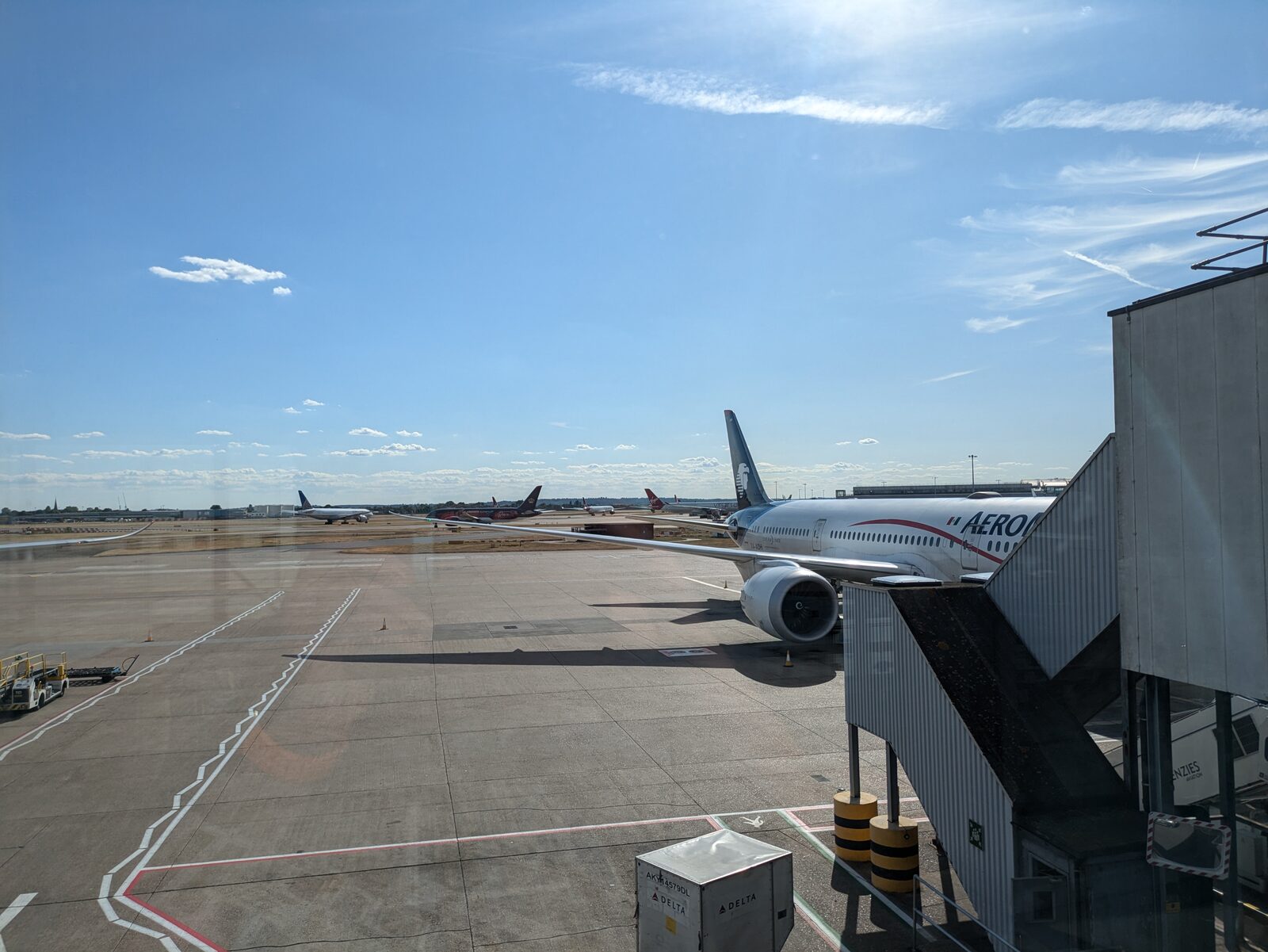
John F. Kennedy International Airport in New York wakes the same way its own city does…reluctantly, yet with a distinctly Manhattan mechanical grumbling. The lighting on one of its numerous cargo facilities snaps on, row by row. Conveyor belts limber up. The Customs and Border Protection (CBP) agriculture screening station smells of engine oil, cardboard dust, and that oddly specific citrus-scented disinfectant any federal airport worker would always find on the job.
Rookie agricultural specialist Danica Hernandez arrives early at Cargo Building 227, typically taking in shipments from Asia, nervous enough to double-knot her hair for the third time before stepping onto the inspection floor. Today is her first full shift, cleared for secondary inspections. No more observation-only shadowing. No more handing tools to other officers like a surgical assistant. Now she’s the one meant to spot anomalies, identify dangers, and stop threats with nothing more than curiosity and gloves.
She repeats her mantra: “This matters. This work matters,” repeating a feeling she never felt in academia.
Her PhD in botanical pathology had been on track until everything fell apart: university politics, a senior researcher stealing her work, and the very publication that should have earned her tenure credit instead listing her as a “technical assistant.” That betrayal was enough to push her into government service, where at least she could point to real results and serve real people.
She’s only halfway through her self-reassurance ritual when Senior Inspector John Carlson appears beside her, holding coffee in one hand and a clipboard in the other.
“Morning, rookie,” he says, voice gravelly from decades of cargo dust. “Quite early, aren’t ya?”
“Just wanted to get ahead of the day,” she replies.
He hands her the clipboard. “Good. Because your ahead-of-the-day just landed.”
Right as he said it, a big Boeing 747 is marshalled onto the stand in front of the terminal, and begins to open up its front cargo door. Several Unit Load Devices are removed from the aircraft and driven into the terminal building, and each shipment undergoes an X-ray inspection.
She glances at the aircraft’s main manifest before zooming in on a sub-manifest for the shipment about to be placed in front of her, as it leaves the x-ray machine:
Country of origin: China.
Declared contents: dried medicinal bulbs.
Weight discrepancy: ~14%.
Radiation traces: marginally elevated.
She looks up. “Elevated? Agriculture shipments don’t usually-”
“No, they don’t.” Carlson sips his coffee. “Could be nothing. Or contraband. Or smuggled wildlife. Or, someone is trying to slip illegal poultry past us again, as they did with those guys from Manila! But the radiation…it’s new, alright. And you’re gonna have to open it.”
Her throat tightens. “Me?”
“Yeah, you,” he confirms. “Welcome to America’s front lines.”
Hernandez approaches pallet 32-B in the inbound agricultural inspection area. The crate looks spotless…perhaps unnervingly so. It was crisp white cardboard, with clean, tape-edged corners, and no dents or markings from its long international journey.
“Too clean,” she mutters.
“You know, smugglers love fresh boxes,” Carlson says, arriving beside her. “Makes everything look professional.”
Hernandez runs her gloved thumb across a tape seam. The bubbles and the way it was sealed back told her it was one sloppy job. She feels her pulse pick up. She grabs her box cutter and slices carefully through the tape.
Inside: vacuum-sealed packets of plant bulbs. Dozens of them. Brown-green, uniform, unnaturally glossy. Each one was dusted with something faintly iridescent.
She leans closer.
Not glitter. Not accidental dust.
The particles shimmer like microscopic beetle shells.
She tilts the packet slightly. The dust shifts—but not downwards. It drifts subtly toward her gloved hand.
Her breath hitches.
“John… that dust just moved.”
“Static?”
“No. Watch.”
She lifts a slide from her pocket, scrapes a few grains onto it, and holds it beneath the overhead lamp. The dust curls, like iron filings reacting to a magnetic field, except her hand is the only thing nearby.
Carlson swears. “That’s not normal.”
“No. It isn’t.”
Before she can process further, the floor supervisor, Mr. Johnson, spots their commotion and calls for backup on his radio.
“Command, we have a potential biohazard at Cargo Building 227…I need a hazmat unit. Repeat, requesting a hazmat unit, over.”
The radio responds, “Johnson, we have eyes on you and your folks, along with that shipment. I can confirm this is no longer a CBP matter.”
“What do you mean?”
“You’ll see.”
Technicians in protective suits converge, sealing the crate in transparent biohazard plastic while cold-air generators hiss to life, lowering the temperature around the pallet.
Hernandez steps back, heart hammering.
She had wanted meaningful work. This is more than she bargained for.
Thirty minutes later, a man in an unmarked black suit arrives with an equipment case. He moves with the precision of someone who has already analyzed the room.
“Dr. Solomon Kade, CDC,” he says, showing his ID from the US Centers for Disease Control. “They told me you spotted the anomaly.”
Hernandez raises her hand. “Yes, sir.”
“Seems like you’re new.”
“I am indeed, sir.”
His eyes assess her, clinically, emotionlessly. “Good instincts.”
She stiffens, not sure whether it’s a compliment or a warning.
Kade approaches the sealed crate and unzips his equipment case next to the standard inspection table. He opens his testing kit and prepares three swabs before he runs them one by one along the plastic covering the bulbs. Once he finishes the three swabs, he runs them through a security spectrometer.
A few beats of silence. Then the spectrometer emits an uneven series of beeps for the first sample. It may sound like your usual “alarm” for drugs or explosives, but the screen tells them it’s probably alive, likely fungi.
The spectrometer gives the same alarming noise after examining the other two samples, and Kade is visibly frustrated.
Carlson glances at Hernandez. “Doc doesn’t like those noises.”
“No,” Kade says calmly. “I do not,” as he grabs a slide and analyzes it under the nearby microscope.
He straightens after a quick look. “This could be a synthetic myco-organism.”
Hernandez’s eyes widen. “Fungal engineering?”
“Not natural,” Kade confirms. “Likely designed for delayed activation. These spores respond to temperature, human oils, and specific light wavelengths.”
Her skin prickles. “A biological weapon?”
Kade taps the crate. “Think of it as a Trojan horse. Not designed to kill immediately, but to embed. To adapt. To persist.”
Carlson curses under his breath. “From China. Of course it is. With everything going on lately…”
Hernandez understands what it may really be.
Tensions between the U.S. and China have been escalating for years. Trade disputes. Cyber espionage. Competing global influence. Allegations, although not quite proven, about lax safety protocols in certain Chinese laboratories back in 2020. Political battles over whether the WHO downplayed early risks.
Bioterrorism wasn’t impossible. Just unthinkable…until the unthinkable became normal.
Kade cuts through their thoughts. “We need to verify whether all crates are accounted for.”
Hernandez checks the manifest. “There were ten crates.”
The warehouse manager checks the arrival logs.
Only nine are in quarantine.
One crate is missing.
“Fuck…” Hernandez mutters.
They rush to the operations room, where footage of the cargo warehouse floor is displayed in multiple angles. The security director is already attempting to backtrack to the incident.
They watch as workers move crates, forklifts beep loudly, and supervisors shout their usual mix of tirades and instructions.
Then, they watch as a middle-aged Asian man in a maintenance uniform approaches pallet 32-B before Hernandez inspects it. He scans the barcode, lifts one crate onto a dolly, and wheels it toward the maintenance corridor.
Hernandez leans forward. “That uniform… it’s fake, alright…”
“Damn right,” Carlson growls. “Logo placement is wrong…wait, no. The logo is wrong, too! Boots are too clean.”
“Freeze that right there!” Kade orders.
They zoom in. The man is of average height, face partially obscured by a cap. Late 30s. Confident stride. In practice, unhurried.
Hernandez’s stomach twists. “He knew what he was taking.”
Carlson nods. “This wasn’t an ordinary, opportunistic theft. He came for that crate.”
Kade’s expression darkens. “He knew what biological payload was inside.”
Hernandez blurts without thinking, “Then he knows how to activate it.”
Kade’s jaw sets. “We need to find him before he does.”
As they run, Carlson calls for backup.
“Command, this is Inspector Carlson. I need backup! We may have some critical biohazard mass leaving 227 in the hands of a smuggler!”
“Copy, Inspector.” The dispatcher continued, “This is CBP local command, I need all hands on deck at Cargo Building 227, biohazard incident in progress!”
Airport police mobilize outside, while CBP officers sweep the building, especially the maintenance wing inside. Airport police seal off all exits. Hernandez runs beside them, adrenaline making every sound too loud.
The maintenance corridor is dim, echoing with the hum of pipes and rattling vents. The air is strangely cold.
Cold.
Her mind races.
The spores deactivate in cold.
“Someone activated the cooling systems,” she says aloud.
Carlson checks a vent as frost rims the edges. “Why would he-”
“To keep the spores dormant while handling them,” Kade answers.
They follow the corridor to the freight office area. A trail of shimmering dust glitters on the linoleum floor like spilled glitter under fluorescent lights.
Hernandez crouches. The dust shifts toward her gloved fingertips.
She swallows hard. “It’s reacting again.”
Kade kneels too. “It’s sensing heat.”
She pulls her hand back, uneasy.
They hear a groan behind a stack of freight boxes.
The suspect lies crumpled on the floor, his uniform half-unbuttoned, sweat streaking down his skin. A refrigerated vial glows faintly in his hand…filled with the same shimmering spores.
Carlson calls for medical response, but Kade blocks him. “Wait.”
The man’s skin shows faint, branching lines beneath the surface, like pale filaments threading through his veins.
Fungal hyphae.
The suspect’s eyes snap open, giving off a smug smile if only for a second.
He gasps, voice cracked and papery. “Too… late…”
Then he goes still.
Hernandez steps back, pulse roaring. “He infected himself.”
“Accidentally,” Kade says. “He opened the crate and didn’t maintain enough cold exposure. The spores activated. Once ingested or inhaled, they metabolize rapidly.”
“Who was he working for?” Carlson asks.
Carlson, with his gloves on, places the suspect’s wallet on a nearby table. No ID. No passport. Just a burner phone. Messages scroll across the screen in Mandarin—before auto-deleting.
Kade snatches the phone before they can stop him. “This stays with me,” he says as he places it in an evidence pouch.
Hernandez catches the way he hides the screen from them.
Something unsettles her.
Nothing about Kade feels fully transparent.
Back in the quarantine bay, ultra-cold fog rolls across the floor as technicians stabilize the fungal samples. The temperature drops below freezing, just enough to force metabolic stasis.
Hernandez assists, moving crates into negative-pressure containers. Her hands move expertly, but her thoughts tangle.
She had read about engineered fungal pathogens in theory. But seeing one up close; watching it move, react, sense, is just terrifying.
Carlson joins her during a short break. “Hell of a first week, Danica.”
“I expected contraband fruit,” she says weakly. “Just like on TV…”
He chuckles. “Of course, everybody expects fruit.”
Across the room, Kade watches her again. Calculating and measuring her.
She looks away before following him quietly.
In the CBP conference room they enter, it smells of stale coffee and printer toner. Screens display maps of cargo routes, agricultural declaration documents, and the suspect’s last known communications.
Kade stands at the front. “The spores are dormant in the cold, activated in warmth. Designed to remain harmless until warmed by human contact.”
Hernandez adds, “And once inside a host, rapid colonization.”
“Correct,” Kade says. “But the crate today was not the first.”
Carlson frowns. “Come again?”
Kade tosses a file onto the table. Hernandez opens it—and her stomach drops.
Same exporter. Same product description.
Shipment date: three months earlier.
Destination: Chicago warehouse hub.
Hernandez shakes her head. “Three months? Why didn’t anyone flag it?”
“No discrepancies,” Carlson says, scanning the page. “Weights matched. Packaging matched. No radiation traces upon inspection. No anomalies.”
Kade’s tone is flat. “Because they were prototypes. Earlier versions. Less refined. The spores would have been dormant longer, less reactive.”
Hernandez puts the pieces together. “I think the shipment today was a calibration.”
“Yes,” Kade says. “A test. It looks like someone wanted to test our response time for themselves. Test what we look for. Which agencies talk to each other, and which don’t.”
Carlson rubs his temples. “And the earlier shipment?”
“Distributed already,” Kade says. “To garden centers across five states.”
Hernandez can barely breathe. “People could have touched them.”
“Probably have.”
“Then why’s there no outbreak?” Carlson asks.
Kade’s gaze lingers on Hernandez before answering. “Because the earlier spores might not have been fully activated. Without a threshold dose of warmth, light, or human oils, they remain inert. They embed but don’t spread.”
Hernandez shudders. Embedded. Waiting.
“And if they encounter the right conditions later…?” she asks.
“Then they will behave exactly as designed.”
Carlson slams the table. “Damn it. We let this slip.”
“You didn’t let anything slip,” Kade says. “You delayed the timeline. That matters.”
Hernandez narrows her eyes. “Why does it sound like you already knew something like this was coming?”
Kade ignores the question.
Carlson finally asks, “Why China? Why, of all things, medicinal bulbs?”
Hernandez answers before Kade does. “Plants are the perfect smuggling vector. Organic. Expected to carry some spores. Hard to screen without damaging them.”
Kade finally speaks. “And politically plausible deniability. If traced back, officials can claim that agricultural contamination occurred. With tensions high: trade wars, naval disputes, cyberattacks, and lingering resentment from the 2020 outbreak…biological accusations become explosive.”
Hernandez thinks of the years of global finger-pointing.
Arguments over whether the WHO had been too lenient on initial Chinese reporting.
Claims of negligence, or worse…at certain Wuhan labs.
Endless congressional hearings that went nowhere.
A new bioterror attack could collapse diplomacy overnight.
Carlson mutters, “This feels like a setup. Like someone wants conflict.”
“Possibly,” Kade says.
“Possibly?” Hernandez echoes.
Kade corrects himself. “Wait, make that probably.”
Her stomach sinks.
Analyst Patel from the forensics team rushes in, pale.
“Sir, Doctor Kade…we found something from the samples we locked down earlier.”
“Go ahead…”
Patel hands over a printout. “The spores exhibit gene sequences associated with CRISPR editing. But not from any known research facility.”
Hernandez scans the report. “Unregistered lab signatures. This wasn’t made in an accredited research center.”
“Exactly,” Patel says. “This is black-market biotech. State-sponsored or private rogue organization,” he sighs. “we can’t tell yet.”
Kade pockets the report with unsettling calm.
Hernandez asks, “What do we do now?”
Kade answers without hesitation. “We are going to Chicago.”
Carlson nods. “Field team?”
“Us,” Kade says. “And a CDC response unit.”
Hernandez blinks. “Me? But I’m just a rookie.”
“You saw things none of the others saw,” Kade says simply. “You understand fungal behavior on a technical level that my team lacks. You’re coming.”
Carlson smirks at her. “Told you this job wasn’t boring.”
She sighs. “When do we leave?”
Kade steps toward the door. “Now.”
As the team gathers equipment, Hernandez pauses in the cold storage bay where the shimmering spores now sleep under deep-freeze conditions.
For a moment, she stands alone in the dim blue light.
The dust inside the sealed slide tray moves…just a fraction of an inch. As if sensing her presence even through the glass.
A cold rush slides down her spine.
She whispers, “What are you?”
The dust settles again, still but not dormant.
Waiting.
Always waiting.
Kade calls from the doorway. “Hernandez. Wheels up in thirty.”
She turns.
“Doctor,” she says. “If the earlier spores are embedded in plants somewhere in Chicago… there could be thousands of exposure points.”
“Yes.”
“And no symptoms yet.”
“Yes.”
“What’s the incubation period?”
“We don’t know.”
He says it too bluntly.
Hernandez studies him. “You’re not telling us everything.”
Kade steps closer, lowering his voice. “If the organism is what I think it is…if it’s modeled after the strain a Chinese military lab experimented with in 2018…CIA research says symptoms will appear only after environmental triggers. Heat waves. Certain pesticides. Soil alkalinity. Human oils.”
“Meaning they could activate months later.”
“Or years.”
“And once activated?”
Kade meets her eyes. “It becomes airborne.”
Hernandez’s throat closes. “We’re too late.”
“No,” Kade says. “Not too late.”
His expression is unreadable, teetering between resolve and dread.
“Just late enough,” he finishes.
Hernandez grabs her gear. “We’ll stop it.”
Kade doesn’t answer.
Outside, a cargo jet howls. Passengers board commercial flights at the terminals. Tourists sip overpriced coffee. Life goes on, unaware of the silent organism now threaded through soil, gardens, and hands across the Midwest.
The first attack has been avoided.
However, the real one is already in place.
Somewhere out there, in a flowerpot, garden bed or compost bin, the earlier spores wait for the right conditions. And when they find them–when heat or humidity or chance awakens them–they will begin the work their creator intended.
Hernandez then follows Kade toward the tarmac.