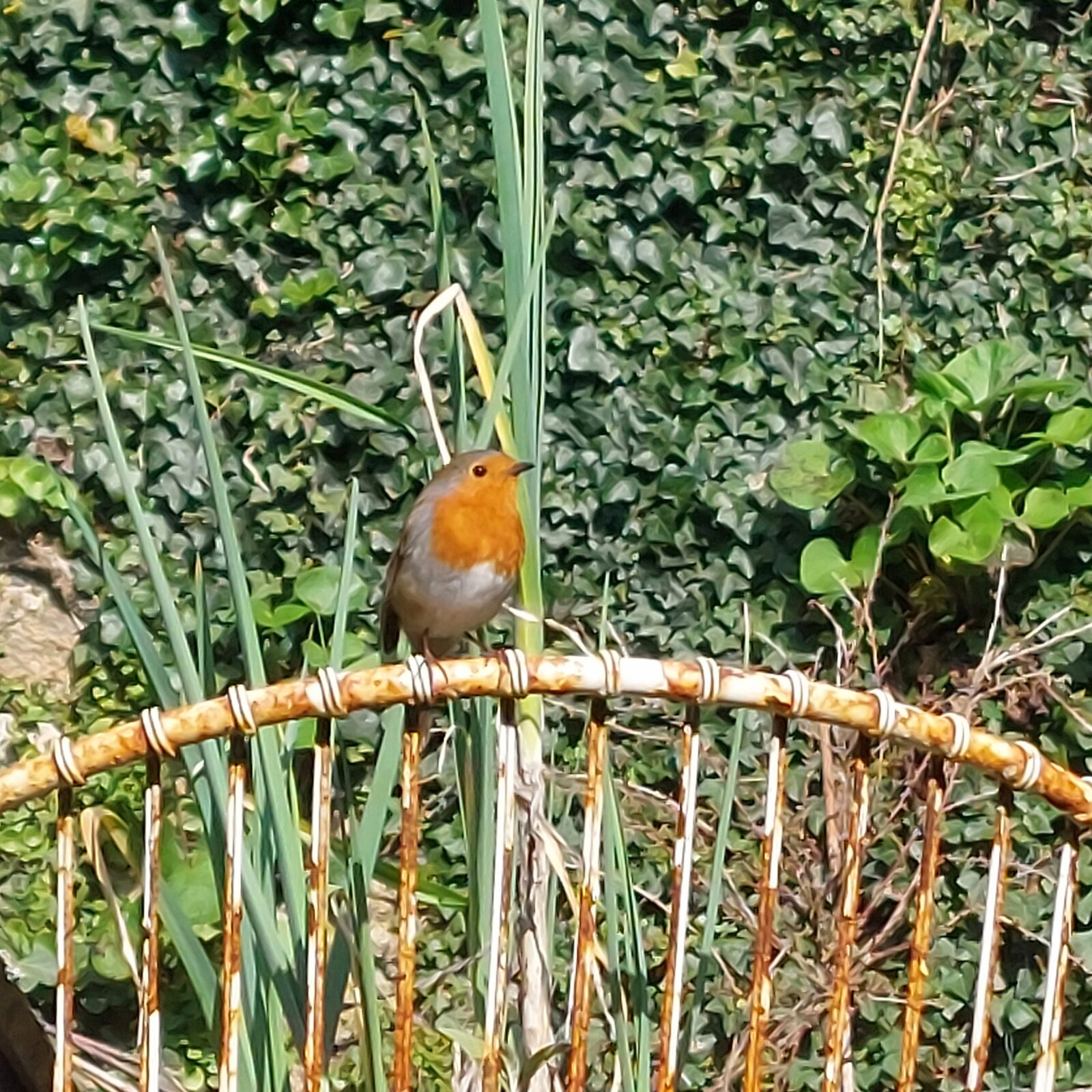
“When I die-”
“Mum!”
“When I die, I think it’ll be nice if I become, you know, if I could get reborn, I mean, I’d like to be a bird. Like a robin.” She paused. A hum of contemplation rising from her throat. “You know, if the Buddhists are right, and we’re destined for reincarnation-”
“Mum-” I tried again to dismiss this path of conversation.
“I think I’ll be a robin.”
“I don’t think you’ll get to choose mum.”
“Maybe so,” she began. “But, when I die, if you ever do see a robin, give it a wave… just in case.”
She died, as she did everything, with grace.
I’d been resting in a chair by her bedside. My foot had fallen asleep well before I had and my skin had glued itself into the cheap faux leather. Her monitor was what had startled me awake. But the nurses and doctors rushing for her limp frame is what woke me. Time of death was 23:11, they said.
The tears didn’t start falling until after midnight.
A round-faced nurse was tasked with removing me from the ward; they had to take away the body, and I no longer had a bed to sit idly by.
‘Come look at this, Pop.’ She was standing at one of those spinning displays you’d find in a gift shop. Why there would be such a thing in a hospital convenience store, I couldn’t quite understand. What it displayed was less logical still.
“Postcards?” I asked.
“Postcards.”
It was a strange item to find, no doubt, but mum always did love that kind of irony. I watched as her once robust hands reached with exertion for one. It was an image of St Mary’s Hospital. The photographer had done nothing to cheer up the grey pallor of the building; the stonework looked just as cold and the windows just as small.
“Aunt Cathy would love this. Have a right old laugh.”
She paid in coins and carefully placed it inside her save the bees! tote bag.
I never did ask if she’d sent it.
I was placed into a side room and told a grief councillor would be with me as soon as one became available. Though they never did come, because within twenty minutes I was found writhing on the floor, eyes rolled and forehead clammy, clutching at my chest.
But it wasn’t that I was in pain, not really. More an absence of it. An absence of anything at all. Nurses rushed around me in confusion. No one knew what to do or what had happened. Later, once stabilised, I would lie. I would say it all happened so suddenly, and without warning or reason.
Lie.
Because, alone in that room, consumed with feelings large enough to drown in, I’d been helpless but to mindlessly repeat what the nurse had said as she pulled me away.
We have to leave now, love, they need to move the body.
The body.
That is how it started.
I went cold. Numb.
She’d caught me staring at her. She looked no different. Her skin tanned and freckled, her face pink in all the right places. Her face wrinkled with deep-cut laugh lines. Her eyes bright. Alive.
“Poppy, there’s no need to look like that. I’m alright, really, the medication they sent me home with is really strong. I can’t feel a thing, alright?” She reached for my hand, leaving hers to rest atop of mine. Always so warm, even at the end. We went back to watching the donkeys on telly. But I couldn’t focus.
“I don’t want you to die, mum.”
“I do have to die at some point, Monkey. We all have our time.”
“Not you.” I mustered. “Not now. This, this can’t be your time. You can’t die like this. It’s not fair.”
“Oh, fair-shmair.”
It was what she’d told the doctor, too, when he’d given her the diagnosis. I know it’s not fair Aradora, he’d said. Fair-shmair, she had replied. But he was right, it wasn’t. It wasn’t fair that her heart had grown to the size of a watermelon. Not fair that her body was to betray her like that. Not fair that she was a medical anomaly. Not fair that her petite body wasn’t built to hold so much love, that it couldn’t contain a heart so generous. Not fair that it would just keep growing, swelling, forced to strain against the feelings it contained.
It was the definition of unfair.
I’d spent a lot of time in doctor’s offices, for mum. But this time was different. It was for me. I sat, exhausted, on the sticky, plastic chair facing the same balding doctor that had, not so long before, given mum her own, unusual diagnosis. Sweat collected on his brow and tickled his upper lip. Stains of perfect circles poked out from his pits. I had been wrapped in one of those foil blankets they gave to runners after a marathon. It rustled with every move but did nothing for the shivering, the goosebumps, or the clenched chattering of my teeth.
My heart had stopped beating. That’s what the doctor told me. Though, that wasn’t all. My heart had shrunk. Shrivelled to the size of a grape, blackened and drained.
‘It’s amazing, I mean, you should be dead, yet, well, here you are, alive!’
Is that what you call it?
I saw the scans myself, I had to, to believe it. It was like looking inside of a dead body. As if a vampire had sucked me dry and reanimated my corpse.
Prune-y, mum would have said. But mum wasn’t there anymore.
She was making a game of it. Every time she’d thanked someone for bringing her a cuppa, every time she laughed at some story Aunt Cathy told over the phone, she’d gasp with all the theatricality of a thespian and clutch her bony chest.
“This is it!” She’d cry, “the killing blow.”
The worst part was, she wasn’t completely off base. Each scan showed an increase in size, it was minute of course, but it was there. When presented with the damning evidence, she’d just look at the doctor and, with a wink, say: am I in trouble doc? But what do you say to that? They couldn’t tell her to stop feeling, stop loving. Stop being kind. Stop being her.
They’d already tried treating the problem medically. Mum had wrinkled her nose at antidepressants, her rosy cheeks rounded comically. Within a week she’d flushed them all down the toilet. She hated the numbness that the doctor believed could slow down her sickness, saying to the exasperated man, that to feel was to live.
Then they wanted to induce a coma, buy enough time to figure out what to do. But mum hadn’t wanted to miss my graduation. And so, she lived. She felt. And she got sicker. Sick enough to double over with pain whenever she giggled. Cry every time she smiled.
She was admitted into hospital for the last time only a day after she’d placed our picture in the mantle. Me in my cap and gown, her in a wheelchair beside me smile beaming, eyes screaming.
The printer ink barely dry. The rental period for the regalia not yet expired.
By the end of the second week, all the staff were happily playing along with her games. Mock disciplining her whenever she’d make them smile. Performatively standing between her and Russel the therapy dog whenever he came around for a cuddle. Her charming, childlike naughtiness infecting them all. Aradora Flemings couldn’t help herself, and in truth, the ward was better off for it. Never had such a bleak place been filled with so much laughter.
But, in this situation, laughter was not the best medicine. And the phrase, love you to death, felt more and more like a cautionary tale. I didn’t want to hold her hand; I didn’t want to show her any kind of affection at all. I began visualising myself as a black robed, scythe welding apostle of death each time her loving eyes would fall on me.
It was a brutal winter. The hospital had sent me home two weeks after my prunification. I became far too busy to worry about the state of my health; estate and funeral planning dominating all of my time. Mum hadn’t accrued much in the way of physical things; her will short, her wishes sweet and simple. The house left to me. The money to all her favourite charities.
Her funeral, on the other hand, was a different story; standing room only and even then, crowds of people surrounded the church unable to get inside.
‘Mum knew a lot of people. And a lot of people had the pleasure of knowing mum.’ That’s all I could muster stood at the mic, beside her for the final time. Her coffin made from an eco-conscience, compostable cardboard. No flowers decorating it. Not for lack of people wanting to send them, but because she hated the thought of blooms being harvested and left to rot just for her. Though the tears of the mourners could have watered them for years. I didn’t cry. I hadn’t been able to. As great sobs heaved in heavy chests, my beat-less heart rattled around like a marble in a blender.
Every hand I shook that day pulled away in horror. I could see on their faces that the feel of my deathly, cold skin disgusted them. I spent most of the day with Aunt Cathy. Every time I looked at her face all I could think of was mum, they had the same smile. Listening to her stories was the closest I’d felt to sunshine in weeks.
“-and she used to send me the strangest things!” She lamented playfully to a group of smiling mourners.
“Like that postcard.” I mumbled.
“What postcard?”
I lived on autopilot, my grief leaving me hollow and my loneliness leaving me bare. I had begun to get used to my new affliction. I put the boiler through its paces, warming the house to a sauna’s standard whenever I was home. Which became more and more often. I’d taken to sleeping in mittens and woollen socks. I maintained the fireplace with stacks of cards from mourners, unable and unwilling to open them and read their words. Choosing instead to light the hearth with deepest condolences.
People crossed the street when they saw me coming, colleagues and friends alike grew pale at the sight of me. I began to live up to my new state of being as without a beating heart, I felt no urge for kindness and smiles. It only took a month for the gentle order to come for me to work from home. I had caused enough hurt and friction to force me out. Their sympathy for my condition the only thing keeping me from being fired completely.
I spent most my time at home staring out of the kitchen window. Mum had created a wonderland for wildlife out there, with bountiful berry bushes and baths for the birds, gracious even to the smallest of creatures. Yet, for me, the garden remained still and lifeless. No birds came twittering through, no foxes rustled the bins. There were no people strolling down the path, entering through the garden gate just how mum had always loved. No one walked through the door without knocking, for a cup of tea or a spot of advice. Why would they? I thought bitterly, while staring at the new, bluish tinge to my skin and the ornate urn on the coffee table. This is no place for the living.
Snowy rooftops turned to slick sidewalks turned to spring flowers. My body so still at that window, feigning the first signs of rigour mortis. I could have stayed there, waiting patiently for the reaper, for the rest of my life. But mum had ideas of her own.
One day, a few hours after taking up my place in front of the kitchen basin, I heard a knock at the door. Then, when I didn’t move to answer it, the sound of the doorbell. A daft and cheery tune mum would often hum along to. It was the postman. A look of concern painted itself across his weatherworn features as he handed me my spoils. I closed the protective shield of the peephole and opened the door. A leaflet for pizza, a letter from the council, why couldn’t he put it through the door like he usually does, I’d thought.
‘Haven’t seen you around town in awhile, Kid. How’re you doing?’
A check in. He probably thought it was what mum would have wanted. Jim, our postman since before I was born. A frequent inhabitant at our dining table. Stopping for tea and a chat in between deliveries. His thick laugh probably still wormed into the wood. Mum had been the first person he ever came out to. She was invited to his son’s wedding.
‘Fine. Thanks, Jim.’ I didn’t look up from the post in my hands. I couldn’t face the reaction he’d have to my bloodshot and sunken eyes. I didn’t need reminding of how horrifying I looked now.
‘Oh, there was this too.’ He handed me an envelope. Great. Another sincere apology for me to burn.
I don’t know what made me do it, after all, I’d tossed the rest of them without even breaking the glue seal, but I tore it open. The image of St Mary’s Hospital stared back at me. The postcard.
‘I- I’ve got to go, Jim. Sorry.’
‘Hey, just let me know if you-’ The door locked away whatever he was going to say.
The grey stone looked just as I remembered, the windows just as small. Though, I realised, something was different. In the windows, little purple flowers were drawn into terracotta pots. And in the one that looked into mum’s ward, a warm yellow light had been shaded. I could feel the warmth. I stuffed the postcard into the pocket of my robe.
I needed air.
I charged my way into the still of the garden. Stumbled my way over to the ornate bird bath mum had loved so much. Without a care for germs, I splashed the pooled rainwater on my face. Then the thought came to me, that postcards have two sides.
It had slightly crumpled in my pocket. I smoothed it out; the damp of my fingers smudging the pencil markings. I turned it over.
She had scrawled a short sentence in weak, shaky handwriting: I think you’ve wallowed for long enough now, Monkey.
On the rim of the ceramic bowl, two tiny talons landed and fragile wings fluttered to a stop. Brown eyes stared intently into my own, a feathered face jutted in that way small birds do, tilting to one side. A rounded, blooming chest that could only belong to a winter robin. Out of place in the spring. Her red middle swelled.
From within me, a beat.